Tactical Performance + Recovery
Built for Those Who Serve.
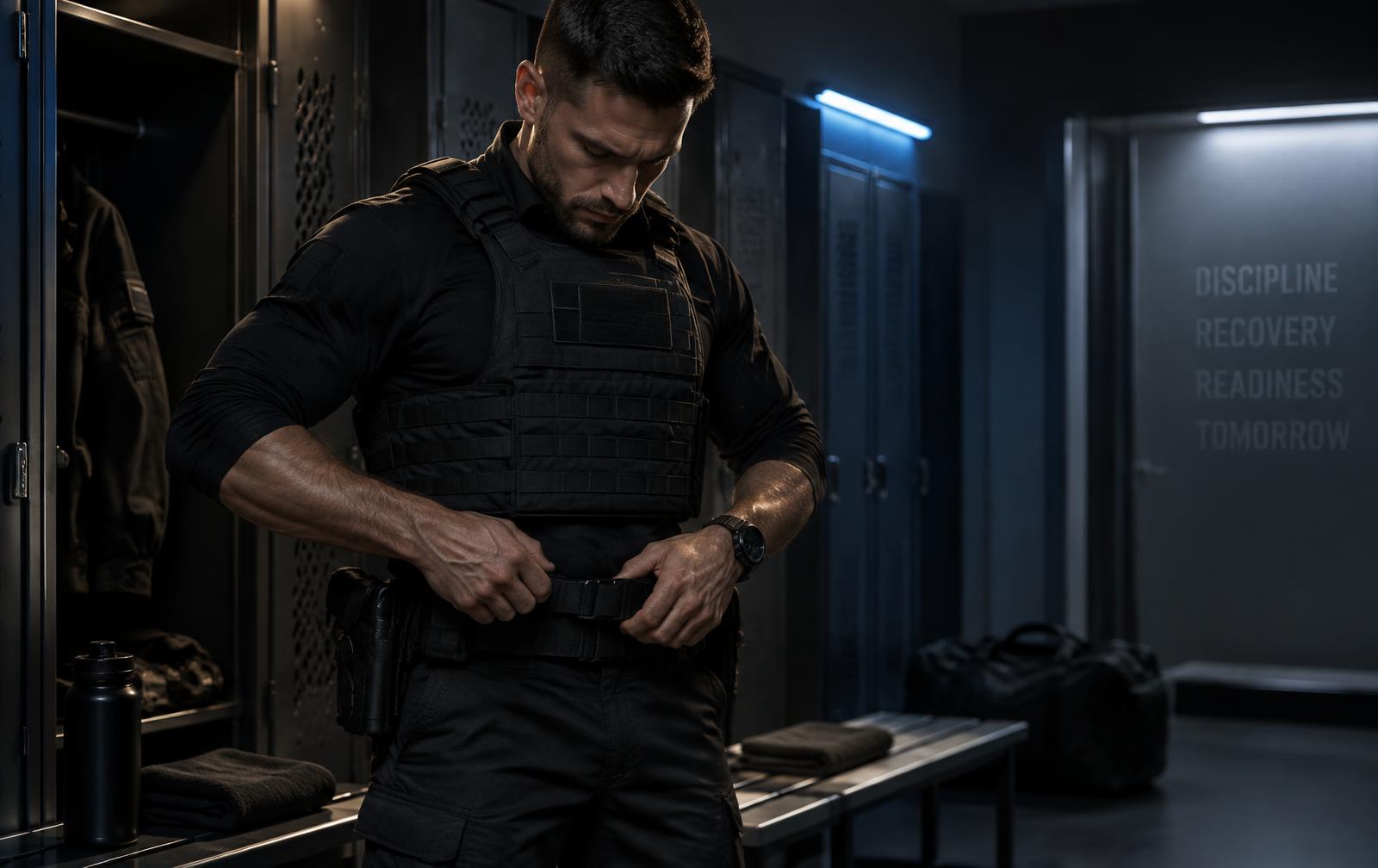
Military service, law enforcement, emergency response, and public safety place demands on the body that ordinary work does not. Body armor. Duty belts. Patrol vehicles. Rucking. Training. Long shifts. Your body is part of your equipment.
Body Logic Chiropractic provides individualized, assessment-driven musculoskeletal care designed around the movement, mobility, recovery, and physical-function demands of tactical professionals.
The Physical Reality of Service
This isn't a desk job.
Tactical professionals routinely ask their bodies to transition between long periods of sitting or standing and moments requiring strength, speed, control, mobility, and immediate physical response.
Military
- Rucking and load carriage
- Body armor
- Repetitive physical training
- Running
- Lifting and carrying
- Field exercises
- Prolonged standing
- Extended seated positions
- Occupational specialties with repetitive physical demands
Law Enforcement
- Duty belts and body armor
- Hours inside patrol vehicles
- Repeated vehicle entry and exit
- Prolonged sitting
- Foot pursuits
- Defensive tactics
- Lifting and controlling unpredictable loads
- Standing for extended periods
- Training and qualification requirements
First Responders
- Lifting and transferring patients
- Heavy equipment
- Unpredictable movements
- Stair climbing
- Prolonged shifts
- Emergency physical demands
Depending on assignment, occupational specialty, and role, not every individual performs every activity listed above.
How Do You Serve?
Different roles. Shared physical demands.
Select your category to see common musculoskeletal stressors associated with that work.
Common physical demands — Military
Depending on assignment, occupational specialty, and role, these demands may vary.
- Rucking and load carriage
- Body armor
- Repetitive physical training
- Running
- Lifting and carrying
- Field exercises
- Prolonged standing
- Extended seated positions
- Occupational specialties with repetitive physical demands
The Evidence
The physical cost of service is measurable.
Peer-reviewed research describes population-level patterns among tactical professionals. These findings do not predict an individual patient's condition or response to care.
Law Enforcement
86%
of 186 English law-enforcement officers in a 2023 study reported a musculoskeletal complaint during the previous 12 months.
Commonly reported areas:
- 59.1% — Lower back
- 48.4% — Shoulder
- 42.5% — Neck
Military
~60%
A Military Medicine review noted that noncombat musculoskeletal injuries may account for nearly 60% of limited-duty days in the U.S. Army.
The review also reported that musculoskeletal injuries may account for approximately 65% of soldiers unable to deploy for medical reasons.
Findings attributed to published Army research, not Body Logic data.
Law Enforcement Ergonomics
88%
of 974 U.S. law-enforcement officers in a patrol-vehicle study reported discomfort or pain at the end of a shift.
Factors examined included:
- Duty equipment
- Patrol vehicle configuration
- Seat adjustment
- Mobile data terminals
Research describes population-level findings and does not predict an individual patient's condition or response to care.
The Physical Cost of Service Is Measurable
Patient-friendly summary
Peer-reviewed research describes a substantial musculoskeletal burden among tactical professionals. A U.S. study involving 974 law-enforcement officers examining patrol vehicles and equipment reported that 88% experienced discomfort or pain at the end of a shift, with the lower back and hips among the most affected areas. A cross-sectional study of English law-enforcement officers likewise reports that musculoskeletal complaints are common in this workforce. A Military Medicine review on U.S. Army readiness noted that noncombat musculoskeletal injuries may account for nearly 60% of limited-duty days and approximately 65% of soldiers unable to deploy for medical reasons.
Why this matters
These findings describe population-level patterns, not individual predictions. They help explain why tactical professionals often seek care focused on movement, mobility, and recovery — and why an individualized assessment matters more than assumptions based on uniform alone.
Sources
Assessment of Challenges in Patrol Vehicles and with Equipment Among Law Enforcement Officers
Applied Ergonomics · 2022
View SourceMusculoskeletal complaints in English law enforcement officers: a cross-sectional study
International Journal of Occupational Safety and Ergonomics · 2023
View SourceMusculoskeletal Injuries and United States Army Readiness Part I: Overview of Injuries and their Strategic Impact
Military Medicine · 2020
View SourceCommon Areas of Concern
Different uniform. Familiar problems.
These body regions are commonly affected by the physical demands of tactical professions. Links go to educational condition pages, not diagnoses.
Don't Guess. Assess.
Your uniform tells us your profession. Your assessment tells us how your body is functioning.
Body Logic does not assume every police officer or military service member has the same problem. Every person is evaluated individually.
- 01
Listen
- History
- Previous injuries
- Training
- Current symptoms
- Occupational demands
- Equipment demands
- Goals
- 02
Examine
- Orthopedic examination
- Neurological examination when appropriate
- Range of motion
- Movement assessment
- Musculoskeletal evaluation
- 03
Measure
- Digital Posture Analysis
- Range-of-Motion Assessment
- CLA Insight technology when clinically appropriate
- Surface EMG
- Thermal assessment when appropriate
- Heart-rate-variability assessment when appropriate
- 04
Build the Plan
- Use the findings to develop an individualized recommendation based upon the patient's presentation and goals.
- 05
Reassess
- Scheduled progress examinations to document meaningful changes and determine whether the care strategy should continue, change, or conclude.
Body Logic technology supports clinical assessment but does not independently diagnose disease or injury unless medically and legally appropriate.

Law Enforcement
Designed around life behind the badge.
- Duty belt load
- Armor
- Vehicle time
- Physical response
- Defensive tactics
- Training
- Long shifts
- Standing
- Mobility between shifts
Military
Care built around the demands of service.
- Physical readiness
- Rucking
- Training
- Load carriage
- Occupational demands
- Mobility
- Recovery
- Existing injuries and repetitive strain
First Responders
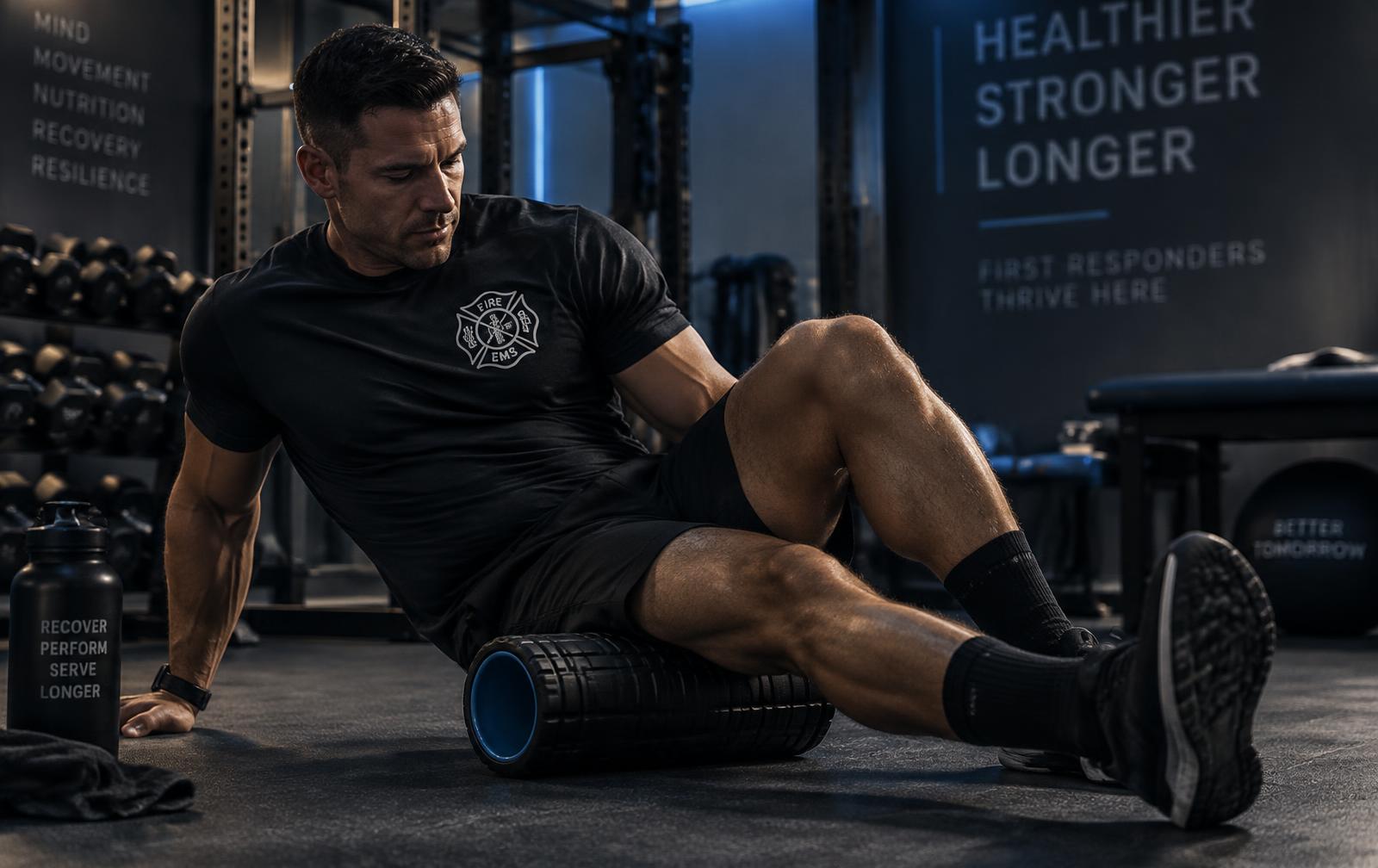
Ready for the next call.
- Patient lifting and transfers
- Heavy equipment
- Unpredictable physical demands
- Stair climbing
- Long shifts
- Emergency response readiness
- Recovery between calls
- Mobility under load
Veterans
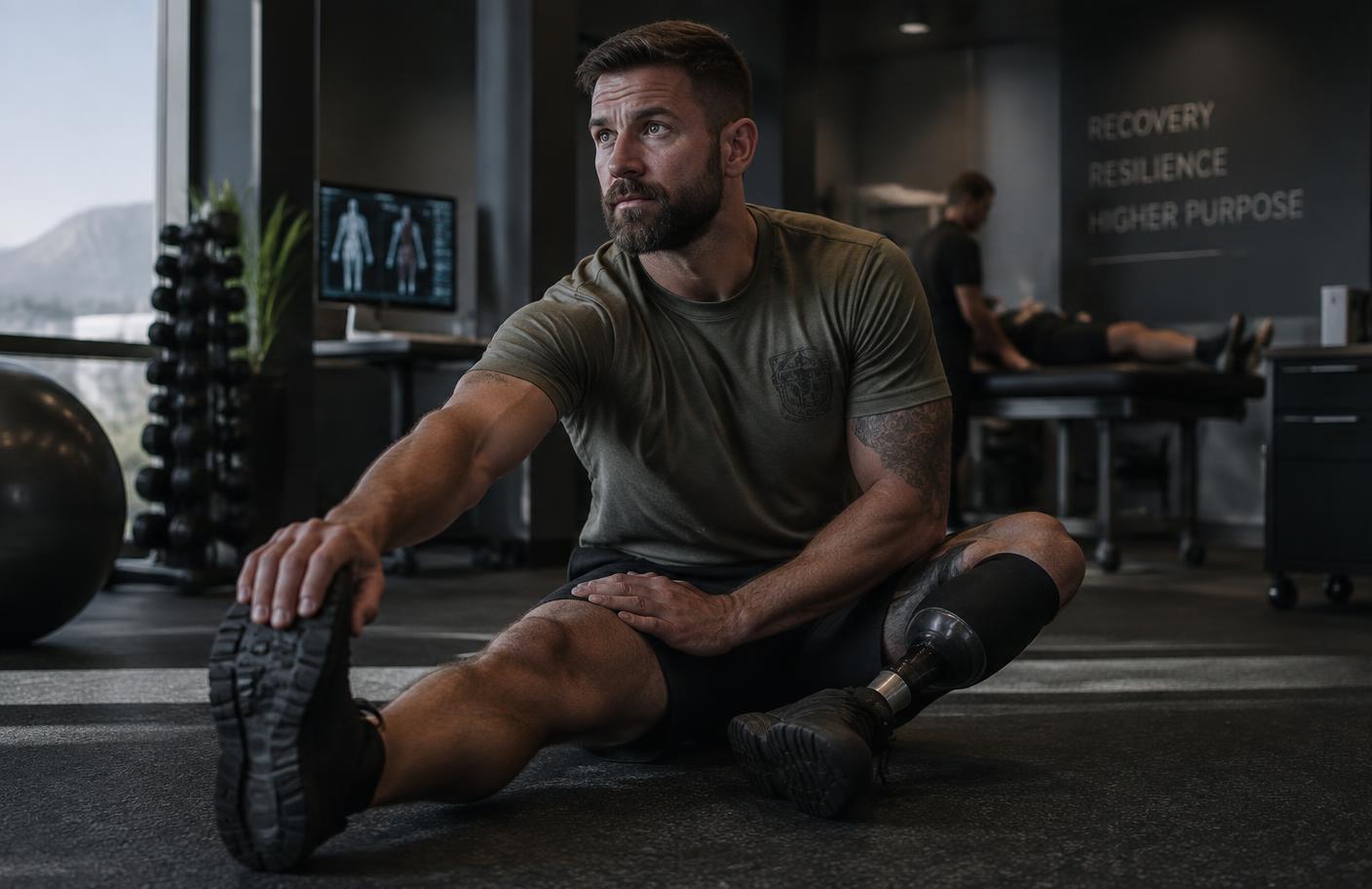
Service ends. Its physical effects don't always.
- Supporting mobility and movement
- Maintaining musculoskeletal function
- Quality of life after years of service
- Respectful, individualized care
Beyond Pain
The goal isn't simply to feel better. It's to function better.
Many tactical professionals seek care not simply because something hurts, but because they want to maintain the physical capabilities their work requires.
Corrective Care
Movement
Recovery
Human Performance
Body Logic does not promise performance enhancement. Care is focused on supporting musculoskeletal function, movement, and recovery.
Modalities
Tools and techniques available at Body Logic.
Only services and equipment currently provided by the practice are listed below. Modalities are used when clinically appropriate.
Real Jobs Don't Run 9 to 5
Care that understands the schedule.
Military personnel, officers, and first responders often work early shifts, late shifts, rotating schedules, long shifts, overtime, training days, court dates, deployments, and emergency schedules. Body Logic works within its actual office availability to make scheduling as practical as possible.
Appointment availability depends on current office hours. We do not promise availability that cannot be provided.
The Body Logic Standard
Objective. Individualized. Built for performance.
Measure First
Objective assessment before recommendations.
Individualized Care
No cookie-cutter tactical protocols.
Progress Exams
Reassess rather than assume.
Human Performance Mindset
Consider what patients need their bodies to do — not simply where they hurt.
From someone who served
Care that earns trust.
“Dr. Adrian Hunter and his staff were very professional during my initial consultation. They listened to my concerns and provided solid advice. As a Veteran and former Marine, I appreciate the level of care and professionalism.”
Individual experiences vary. Testimonials describe personal experiences and do not guarantee a particular outcome.
Supporting the People Behind the Mission
Department, unit, and agency education.
Body Logic also works with organizations interested in musculoskeletal education, movement screenings, ergonomic education, health presentations, and workforce wellness initiatives.
Nothing on this page implies an existing government contract or agency partnership unless verified.
Tactical FAQ
Questions tactical professionals ask first.
Do you work with police officers?
Yes. Body Logic provides individualized musculoskeletal care for law-enforcement officers and other public-safety professionals.
Do you work with active-duty military personnel?
Yes. Active-duty service members are welcome at Body Logic. Care recommendations are individualized based on the person's clinical presentation and goals.
Are you affiliated with the Department of Defense or VA?
No. Body Logic Chiropractic is an independent practice. Nothing on this page implies endorsement by the Department of Defense, Department of Veterans Affairs, military branches, or any government agency.
Can I come in even if I am not currently injured?
Patients seek evaluation for many reasons. The appropriate recommendation depends upon the examination findings, clinical presentation, goals, and whether chiropractic care is appropriate.
Can you work around shift schedules?
Body Logic will work within its available office hours to make scheduling practical for patients with nontraditional schedules.
Do you treat duty-belt-related back pain?
Officers experiencing back pain or other musculoskeletal complaints can be evaluated to identify relevant clinical and movement findings and determine appropriate care. A duty belt itself is not necessarily the diagnosis or sole cause.
Can you provide documentation?
Appropriate clinical documentation can be provided, and Body Logic can communicate with other healthcare professionals when clinically necessary and authorized by the patient.
Do I need X-rays?
Imaging should be based upon clinical indication. If imaging is appropriate, Body Logic may refer the patient to an outside imaging facility.
Body Logic Chiropractic is an independent healthcare practice and is not affiliated with, sponsored by, or endorsed by the Department of Defense, Department of Veterans Affairs, any branch of the United States Armed Forces, or any federal, state, or local law-enforcement agency.
Tactical Performance + Recovery
Take care of the body that carries the mission.
Your profession may demand more from your body than most. Your healthcare should begin by understanding those demands. Start with a comprehensive Body Logic evaluation and learn what your body needs to move, function, and recover more effectively.
Body Logic Chiropractic
6130 Brandon Avenue, Springfield, VA 22150
Serving Northern Virginia, Washington D.C., and the DMV.